General Submission Guidelines
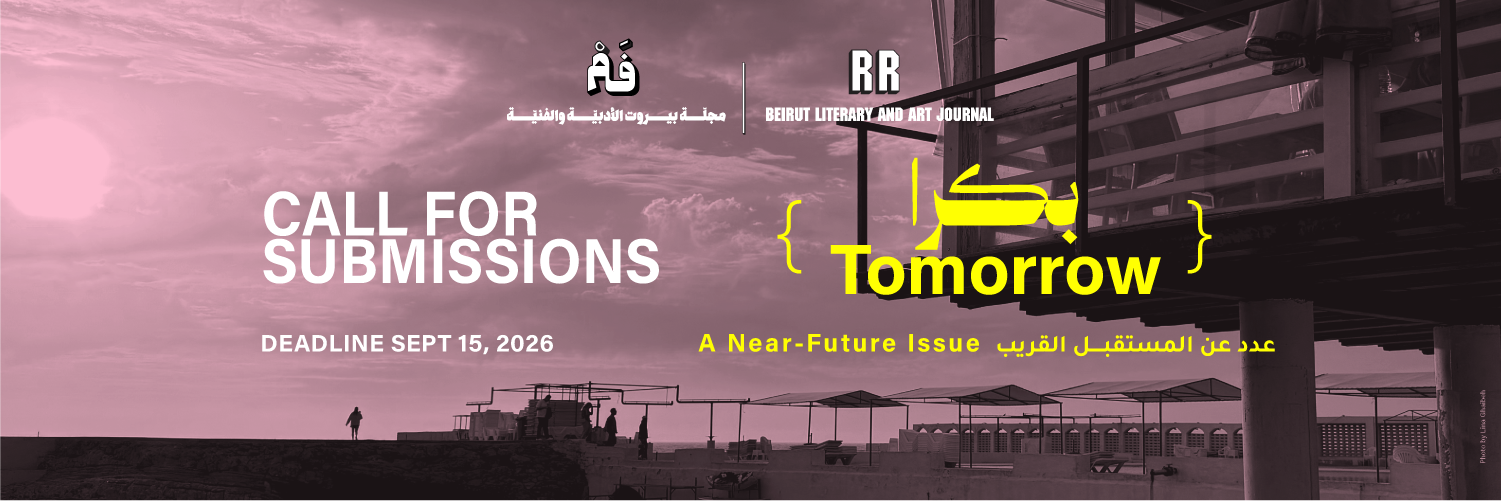
Rusted Radishes: Beirut Literary and Art Journal is a bilingual journal publishing in Arabic and English across both print and online platforms. We announce calls for submissions to our print issue on our website and social media channels. All work submitted through an open call will be considered for both print and online publication. Visit our Submittable portal to view current calls and submit your work.
Please note that we are currently not accepting unsolicited submissions for our Webzine in English or Arabic until further notice.
If you have questions regarding submissions, please send an e-mail to submit@rustedradishes.com.
PREPARING YOUR SUBMISSION
Attachment: Submit each writing piece as a separate .doc or .docx file. Artwork should be submitted as low-resolution digital files.
Bio: Provide a brief professional biography written in the third person, no longer than 80 words.
Formatting: Simply use a 12-pt font and double-space each prose piece. Retain the original form in your poetry.
Multiple submissions are welcome: Check the guidelines for each genre regarding submission limits. Contributors may submit across genres, but please limit your total submissions to two.
Name each submission ‘title_genre’: Include your full name and e-mail address on the top of the first page of the actual submission file.
Simultaneous submissions are welcome: In the case you need to withdraw work, do so through the Submittable submissions manager; or via submit@rustedradishes if the manager is unavailable to you.
TIPS AND POLICIES
-
- Copyright reverts to contributors after publication; we ask only for a courtesy acknowledgment of first publication.
- Translators are responsible for securing all author and publisher permissions related to the source work.
- By submitting to Rusted Radishes, you agree to be added to our email lists. You may unsubscribe at any time.
- When submitting through Submittable, add info@rustedradishes.com to your contacts or safe sender list to ensure that you receive correspondence from us.
- After submitting, you may log in to your Submittable account at any time to check the status of your submission. If you have not received a response six months after submitting, you may contact us at submit@rustedradishes.com for an update.
Genre-specific Guidelines
We accept work in both Arabic and English; please submit work in either language to the appropriate genre.
Fiction
We welcome literary fiction in traditional, experimental, and hybrid forms. We are drawn to work that explores contemporary themes while demonstrating a distinctive voice, fresh vision, and careful attention to craft. We consider flash fiction, short stories, and unpublished novel excerpts. The maximum word limit is 5,000 words. Submit no more than one long-form and one short-form story.
Creative Nonfiction
We welcome creative nonfiction essays that are self-interrogative and reflective and that reach beyond the self to analyze or explore human conditions. We welcome a range of forms, including flash nonfiction, personal essay, literary journalism, visual essays, and unpublished memoir excerpts. The maximum word limit is 5,000 words. Submit no more than one long-form and one short-form essay.
Poetry
We welcome poetry in all forms, from traditional structures to experimental and hybrid works—including free verse, prose poetry, sonnets, villanelles, ghazals, and beyond. We are drawn to poems that transform experience and imagination into deeper inquiries into human conditions while expanding the conventions of poetic form. We seek poetry that engages the senses, pushes ideas, and moves beyond sentimentality. Submit up to five poems in a single document.
Translations
We welcome translations into Arabic and English from any language along with a translator’s note when possible. We are interested in translations that bring vital literary and artistic voices into new linguistic and cultural conversations. Please submit both the original work and translation, along with any required permissions. Translators are responsible for securing all author and publisher permissions regarding source texts. Submit up to three translations.
Artwork
We welcome visual art across a range of media, including but not limited to painting, illustration, collage, photography, sculpture, installation, textiles, ceramics, and digital media. We are interested in work that engages thoughtfully with materials, form, and ideas, and that pushes conventional ways of seeing.
Non-digital work should be scanned or photographed in high-quality digital files with signatures removed. Please submit works in low resolution; accepted contributors will be asked to provide high-resolution files (not exceeding 5 MB). Each submission should be attached as a .pdf, .eps, .jpeg, or .tiff file. Please submit up to five works.
Graphic Narratives
We welcome graphic narratives, comics, and excerpts from unpublished graphic novels. We are drawn to work in which image and text are inseparable—where each expands, complicates, or resists the other. Submit up to five works.
Submit as a PDF or as a series of .jpg images (scans or digital art) at 150 dpi. If accepted, higher-resolution files will be requested. The preferred dimensions are the Rusted Radishes print ratio (19.5 cm W × 24 cm L); otherwise, A4 format is acceptable. File size should not exceed 10 MB.
Drama
We welcome plays or performance pieces—including one-act and full-length works, translations, adaptations, monologues, dialogues, and other dramatic writings—that engage with and expand theatrical possibilities. We are drawn to dramatic writing that takes advantage of and/or subverts theatrical conventions. A written play is an essential component of theater, but not its entirety. We publish dramatic works with the hope that they will find their way into performance. Please submit up to two works.
Multimedia
We welcome multimedia works, including photo essays, video works, video essays, mini-documentaries, podcasts, and other forms that bring together image, sound, text, and moving media. Contributors may submit completed works or contact us with proposals for consideration.
قبل إرسال مشاركتكم
فَمْ: مجلة بيروت الأدبية والفنية مجلة ثنائية اللغة تصدر بالعربية والإنجليزية عبر منصتيها المطبوعة والرقمية. نعلن عن فتح باب التقديم للعدد المطبوع عبر موقعنا الإلكتروني ومنصات التواصل الاجتماعي. وتُنظر جميع الأعمال المقدّمة من خلال الدعوات المفتوحة للنشر في كلٍّ من النسخة المطبوعة والمنصة الرقمية. للاطلاع على الدعوات الحالية وإرسال أعمالكم، يُرجى زيارة صفحتنا على Submittable. يرجى الملاحظة أننا لا نستقبل حاليًا مشاركات غير مدعوة للنشر في مجلتنا الرقمية، سواء بالعربية أو الإنجليزية، وذلك حتى إشعار آخر.
إذا كانت لديكم أي استفسارات تتعلق بالتقديم، يُرجى مراسلتنا عبر البريد الإلكتروني: submit@rustedradishes.com.
الرجاء قراءة التعليمات العامة قبل إرسال مساهماتكم. نعتذر عن عدم مراجعة المساهمات التي لا تتبع التعليمات التالية:
-
-
-
-
-
- المرفقات: على المساهمين تقديم نصوصهم على شكل رابط جوجل دوكس GoogleDocs متاح للجميع (open access)
- في الجزء العلوي من الصفحة الأولى من ملف الجوجل دوكس، الرجاء إضافة
- عنوان النص
- اسمكم الكامل
- عنوان بريدكم الإلكتروني
- أسماء حساباتكم على السوشيال ميديا
- يرجى إرفاق على الصفحة نفسها سيرتكم الذاتية الموجزة التي لا تتجاوز 80 كلمة. نحتفظ بالحق في تحرير سيرتكم الذاتية بما يترافق مع ضرورات النشر.
- على جميع الأعمال الفنية أن تسلّم كمرفق منخفض الدقة.
- ندعو المساهمين الراغبين في سحب أعمالهم القيام بذلك من خلال موقع Submittable، كما نرجو منهم الإشارة إلى النص الذي يرغبون في سحبه.الإشارة إلى القصيدة التي يرغبون في سحبها.
إرشادات خاصّة بالأنواع الأدبيّة
يرجى إرسال مساهماتكم ضمن الأنواع المناسبة الآتية:
القَصَص
نبحث عن أعمال قصصية على أنواعها، فنرحّب بالقصص ذات المنحى التقليدي كما نشجّع الأعمال الأكثر تجريباً من حيث الشكل أو المضمون. نستقبل الأقاصيص والقصص القصيرة جداً (350-1000 كلمة) ومقتطفات من روايات غير منشورة (1000-4000 كلمة). لا يمكن إرسال أكثر من عمل قصصي طويل واحد وعمل قصصي قصير واحد.
النصوص الإبداعية غير الروائية
على النصوص الإبداعية غير الروائية أن تتميّز عن التحقيقات الصحفية أو المذكّرات التقليدية. كما ينبغي أن تتسم الأصوات الأدبية بالجاذبية والصدق والابتكار، وأن يكون مؤثرة، وأن تقدّم رؤية جديدة تتجاوز التجربة الفردية لتعكس التجارب الأوسع. تُقبل جميع المقاربات والأساليب، بما في ذلك القصة، والمقالة الذاتية، والصحافة الأدبية، ومقتطفات المذكّرات، على ألا تتجاوز 4000 كلمة.
الشعر
نبحث عن الشعر في جميع أشكاله. لا يمكن تقديم أكثر من خمس قصائد لكل عدد.
الترجمات
نستقبل ترجمات إلى العربية من الإنجليزية أو الفرنسية. يرجى تزويدنا بالنصين، الأصلي والمترجَم. وفي ما يخص العمل الأصلي، تقع على عاتق المترجِم مسؤولية الحصول على إذن كلٍّ من المؤلف والناشر، لذا يرجى تزويدنا ما يثبت الحصول على حقوق النشر. يُسمح لكل مشارك بإرسال ما يصل إلى ثلاثة نصوص مترجمة على ألا تتعدّى 2000 كلمة.
العمل الفني
نرحب بالأعمال الفنية في مختلف المجالات، بما في ذلك الرسم، والزخرفة، والتصوير الفوتوغرافي، والنحت، وفن الملصقات، والمنسوجات، والخزف، والوسائط الرقمية. يجب تصوير الأعمال غير الرقمية وتحويلها إلى ملفات رقمية. عند التقديم، يُرجى إرسال جميع الأعمال بدقة منخفضة، وفي حال قبولها، تُطلب النسخ النهائية بدقة عالية، على ألا يتجاوز حجم كل ملف 5 ميغابايت. يجب إرفاق كل عمل بإحدى الصيغ التالية: PDF أو EPS أو JPEG أو TIFF. يُسمح لكل مشارك بإرسال ما لا يزيد على خمسة أعمال.
القصص المصوّرة
نستقبل الرسوم والقصص المصوّرة، وكذلك مقتطفات من روايات الجرافيك غير المنشورة. يُسمح لكل مشارك بإرسال ما لا يزيد على خمس مساهمات. يجب إرسال الأعمال بصيغة PDF أو JPG، بدقة 150 نقطة في البوصة (dpi)، وفي حال قبول العمل، سيُطلب تقديم نسخة بدقة أعلى. يُفضّل أن تتوافق أبعاد العمل مع مقاس كتاب فَمْ (19.5 سم عرضًا × 24 سم طولًا)، وفي حال تعذّر ذلك، يمكن إرساله بمقاس A4. ويجب ألا يتجاوز حجم الملف 10 ميغابايت.
المسرح
نبحث عن مسرحيات، سواء أكانت من فصل واحد أو أعمالًا كاملة أو ترجمات أو اقتباسات، تستلهم المسرح التقليدي أو تعيد مساءلته. فالنص المسرحي وحده لا يصنع المسرح، بل يشكّل جزءًا منه، إذ لا تكتمل المسرحية إلا حين تُعرض على الخشبة. لذلك، نسعى من خلال نشر هذه الأعمال إلى إلهام القرّاء والمسرحيين لتقديمها على المسرح. يُسمح لكل مشارك بإرسال مسرحية واحدة فقط.
الأعمال متعددة الوسائط
نرحب بالأعمال متعددة الوسائط، بما في ذلك المقالات المصوّرة، وأعمال الفيديو، ومقالات الفيديو، والأفلام الوثائقية القصيرة، والبودكاست، وغيرها من الأشكال الإبداعية التي تجمع بين الصورة والصوت والنص والوسائط المتحركة. يمكن للمساهمين إرسال أعمال مكتملة، أو التواصل معنا لتقديم مقترحات لمشاريع قيد التطوير للنظر فيها.