




Mahmoud Khaled, Proposal for a House Museum of an Unknown Crying Man (2017)
We stopped at a four-story building, nestled between blocks of identical apartment buildings, all painted hues of grey and faded white – a visual, palpable reminder of Soviet architecture or, rather, modernist brutality masquerading as rationality. The neighborhood was slowly succumbing to another ideology, a neoliberal monstrosity: irrational, wasteful and devoid of intrinsic value beyond consumption itself. Appearance had finally taken over matter and meaning.
After months of “courting” me, I was surprised when Medhat decided to take me to meet Mr. Kamel, a reclusive, leftist intellectual with an Islamist bent. I didn’t understand the connection between them. Medhat is a pseudo-Islamist, whose parents are senior members of the Muslim Brotherhood. Apparently, Mr. Kamel knew Medhat’s father during a brief stint in prison. Incarceration is a likely place for unusual bonds. Still, these convergences between the left and the Islamists always left me slightly baffled.
I had met Medhat through a mutual friend, Tamer, an Egyptian transplant to the Gulf. Tamer’s family made it big in the 1970s and like all his compatriots in the GCC, he was constantly trying to find a footing in a country far removed from the Arabian peninsula and its fantastical, hyper-consumerist world. Tamer was neither politicized, nor really religious. His family retained a benign bourgeois religiosity that saved him from most of the travails and upheavals of the religious revival movements. I was not sure how Tamer and Medhat became friends, but it seemed that Tamer’s absence from the political and social turmoil of militant Islamist movements made him more curious and perhaps fascinated by the commitment and zealotry of a Muslim Brotherhood member. To some, ardent conviction was persuasive.
Of all of Tamer’s friends, I was the least likely person Medhat would befriend or take an interest in. And yet with all the zeal of proselytizing, he pursued me as a worthy “addition” to his “group.” Although I shared the same benign religiosity with Tamer, and an even stronger liberal streak, I harbored an enormous resistance to authority, a disposition typical of youth but one I projected far more than our friends. My distrust in authority and the collective convinced Medhat that I might be open to his “group.”
I wasn’t. And Medhat kept trying to show me that my distrust in Islamist movements was unfounded. For weeks, he would drive me around to mosques, offices, and even personal homes of high-ranking Muslim Brotherhood members, showing me the diversity of political positions and tactics. He once said, “We might want the same thing, but we are not all the same.”
I remained unconvinced. The questions of salvation and grace remained entirely personal to me. “Man is what man does,” as my grandmother would say, and if man kills the innocent, then man is a killer. No matter what garb he wears, and what prayer he says. Medhat hated when I would say that.
Mr. Kamel was Medhat’s secret weapon, I guess, given that he was a respected leftist and would not be immediately lumped together with the Muslim Brotherhood. In my mind, the two political camps want different things.
I also kept wondering if Mr. Kamel knew that Medhat was a “deviant” who had a stellar track-record of chasing fair-skinned boys with no personality. Despite my contempt for Medhat and his hypocrisy, I acknowledged his struggle of being the son of religious fanatics. So I kept my thoughts to myself.
I was apprehensive about meeting Mr. Kamel. Of all the people that Medhat introduced or tried to lure me with (the second in command in the Muslim Brotherhood’s Guidance Bureau or the mastermind behind a major Cairo suburb or the dean of the faculty of Quranic Sciences), Mr. Kamel was perhaps the only one I could imagine being impressed by, or even moved by his political conviction and commendable career in labor activism.
We entered the building. The staircase, the walls, the lights all screamed frugality. It was a testament to a time when construction materials were hard to come by. People often forget that since its independence, Egypt has been in constant wars and operating as a “war economy” for more than three decades continuously. The physical traces linger everywhere, long after people forget.
Mr. Kamel was tall, quite imposing, with a large face that had very distinct features. Every part of his face was exaggerated as if it was a caricature. Yet it didn’t look funny or disproportionate. Rather, it corresponded to his personality somehow. His bushy eyebrows, prominent nose, and haggard skin all spoke to senses that were well used but still powerful. Even his voice boomed like an amplified bass, the long vocal cords resonating in overextended, low frequencies, like the rest of him. But there is something unsettling about encountering strangers. The sudden burst of information causes me to lag. I need time to process it – the way their eyes move, the tone of their voice, the tilt of their head, the sound of their breath, the way they gesture. I need time to decide how to respond. I have been told that in the interlude between seeing and responding, I come across as judgemental or dismissive. An error of judgement I usually fail to correct.
The flat was simply furnished, almost bare. The only sign of excess was a large library in the living room, stacked with books. Many were newer editions of classics, mostly Islamic references. It reminded me of my uncle’s library. But this one looked like a do-over with all the gaudy colors and shiny covers. As if Mr. Kamel lost all his books and had to get newer editions of what he may have once had.
We sat on a dilapidated couch; low frequencies filled the air as he laughed with Medhat and asked about his parents and his “wayward” ways. I paused at that question. Could he really know Medhat’s “secret”? He displayed a certain fatherly affection towards him, which I found endearing but wholly undeserved. I was a bit resentful because I felt the Islamist movements robbed us of any chance to think about the political, outside mere ritual or identity. I had never met a retired leftist of Mr. Kamel’s stature before, and I was cautiously curious to see how a man of integrity could deal with the ethical mayhem of the Islamist movements.
He turned and asked me, “How do you know Medhat?”
“Through friends,” I said.
He smiled knowingly, his eyes downcast a bit, seemingly resigned. Uneasy perhaps. “And what do you do?”
“I just graduated and am currently thinking of pursuing a postgraduate degree.”
He looked a bit shocked. “What exactly do you want to study?”
“Maybe Islamic studies. I am curious about different interpretations of reading sacred texts and their relationship to law.”
He seemed amused. ”That is a bit vague, but sounds interesting.”
Medhat looked smug, he knew that I would somehow impress Mr. Kamel and he said, “Mohsen is a great intellectual. And has a bright future awaiting him.”
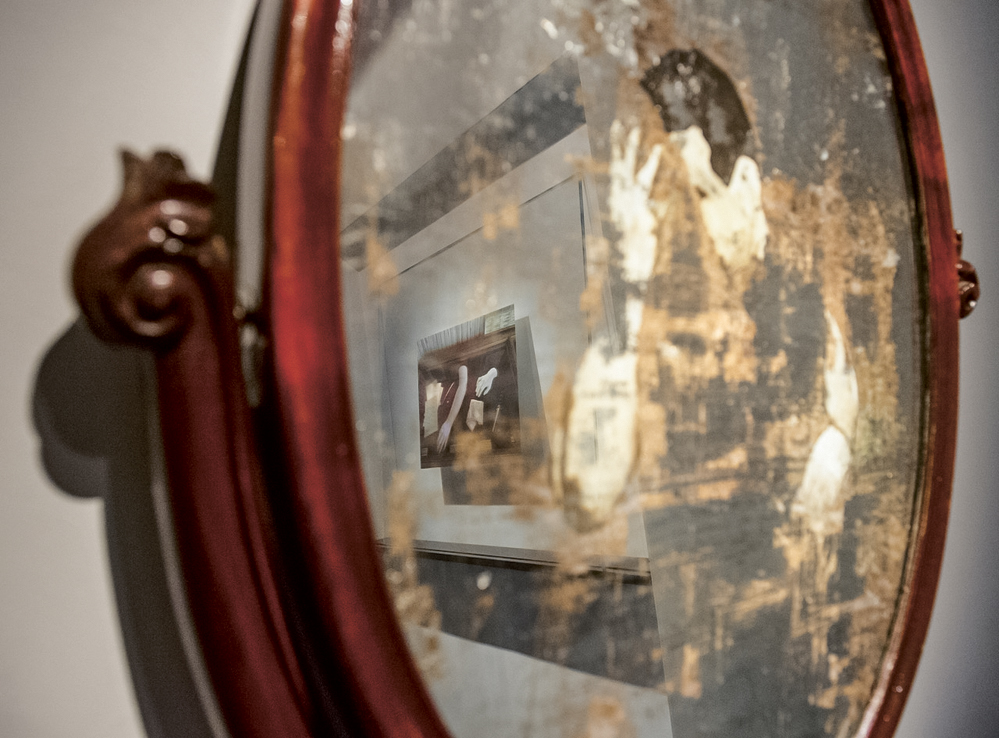
Mahmoud Khaled, Proposal for a House Museum of an Unknown Crying Man (2017)
I wasn’t sure how to feel about Medhat’s sense of pride. I was suspicious. It was not a question of sincerity, rather consistency.
They continued the conversation. Medhat was boasting about the mini-renaissance the Muslim Brotherhood was witnessing, as they just became the largest opposition bloc in the parliament. It was a moment when the Islamic alternative was a plausible political reality. All the mindless theatrics aside. Mr. Kamel didn’t seem very convinced. He wasn’t exactly poised against the Islamists, but thought there was too much hot air, and not enough substance.
Their conversation diverged and they ended up discussing textual authority. I sat listening quietly, intently. I was taken by Mr. Kamel’s presence. He was wearing an olive green sweater that together with his wrinkled skin made him look like an ancient tree. Suddenly he turned to me: “What do you think about the textual chaos the Salafis are creating?”
“Literalism hits its own wall very fast. As for the argument of authenticity, traditions can always be critically examined.” I had often thought about that question, considering the way Salafis arbitrarily deal with textual traditions, elevating some and dismissing others, based completely upon notions of adherence and ritual rigor, even if dogma engenders otherwise. But I kept my answer short.
He lifted his bushy eyebrows surprised and then looked at Medhat: “Ah, that one is different!”
I stared at Mr. Kamel, and he continued, “Medhat brought some of his other friends last time.” He looked at Medhat, “What was his name? That tall boy with the cheeky smile?”
“Reda,” said Medhat, smiling wryly.
Mr Kamel then said, “Yes that one! What an airhead!”
Yet I wasn’t flattered by Mr. Kamel’s subtle admonition. I admired the outward kindness and seeming sincerity but there was something alienating about the entire setting. I felt as if I had stepped into a foreign scene. It’s the same feeling I had when I first entered Medhat’s apartment. The faded wallpaper, the bulky crème-coloured furniture, the old-fashioned light fixtures, twisted like snakes. Even the way his parents dressed, the way they spoke, made them and the apartment seem frozen in time. The father had been imprisoned and then exiled to Cyprus. Every time he spoke, there was a temporal and logical gap. And the mother was terrifyingly cunning, a testament of her surviving something horrific. Her mode of speech was something I have never witnessed before. Every word was spoken to disarm and implicate. It was deeply alienating to witness what persecution and torture does to the mind. The few times I talked to her, I felt this defensiveness and fear, seeping through from her years of confinement, torture and exile. It was not just a matter of distrust that made her devolve into a resentful zealot, but a moral injury that shuts out the world.
I could not separate the two scenes. Medhat’s parents whose failed political commitment, even if misguided, led them to prison, torture, and exile. And Mr. Kamel, whose failed political idealism also led him to a position not very different from his erstwhile political nemeses. A political Left that was forced to completely redefine itself on the terms of a religiously extremist, right-wing group and two political fanatics with a deeply closeted son, trying so hard to pretend otherwise. I questioned the possibilities of belonging together that either of them proposed or imagined. What community could we all belong to beyond their fantasies of maniacal domination or willful exclusion of difference?
Medhat then got up all of a sudden, signalling that we were leaving. He enjoyed those unexpected bursts of externalizing his desires, leaving those around him caught off guard, or unprepared to respond. Somehow this tactic reinforced the idea that he is unpredictable, or that he is one step ahead of everyone – an illusion of control perhaps.
They shook hands and warmly embraced. Mr. Kamel then shook hands with me, his much bigger than mine, and he looked at me intently saying, “You are not as empty as the other one,” nodding towards Medhat, who laughed, acknowledging the statement. But I could feel he was not really interested in doing anything beyond the acknowledgment. And Mr. Kamel’s approval, or brief recognition of who I was, did not survive beyond his doorstep. As he closed the door, the whole scene came to a close. I never saw Medhat or Mr. Kamel again.
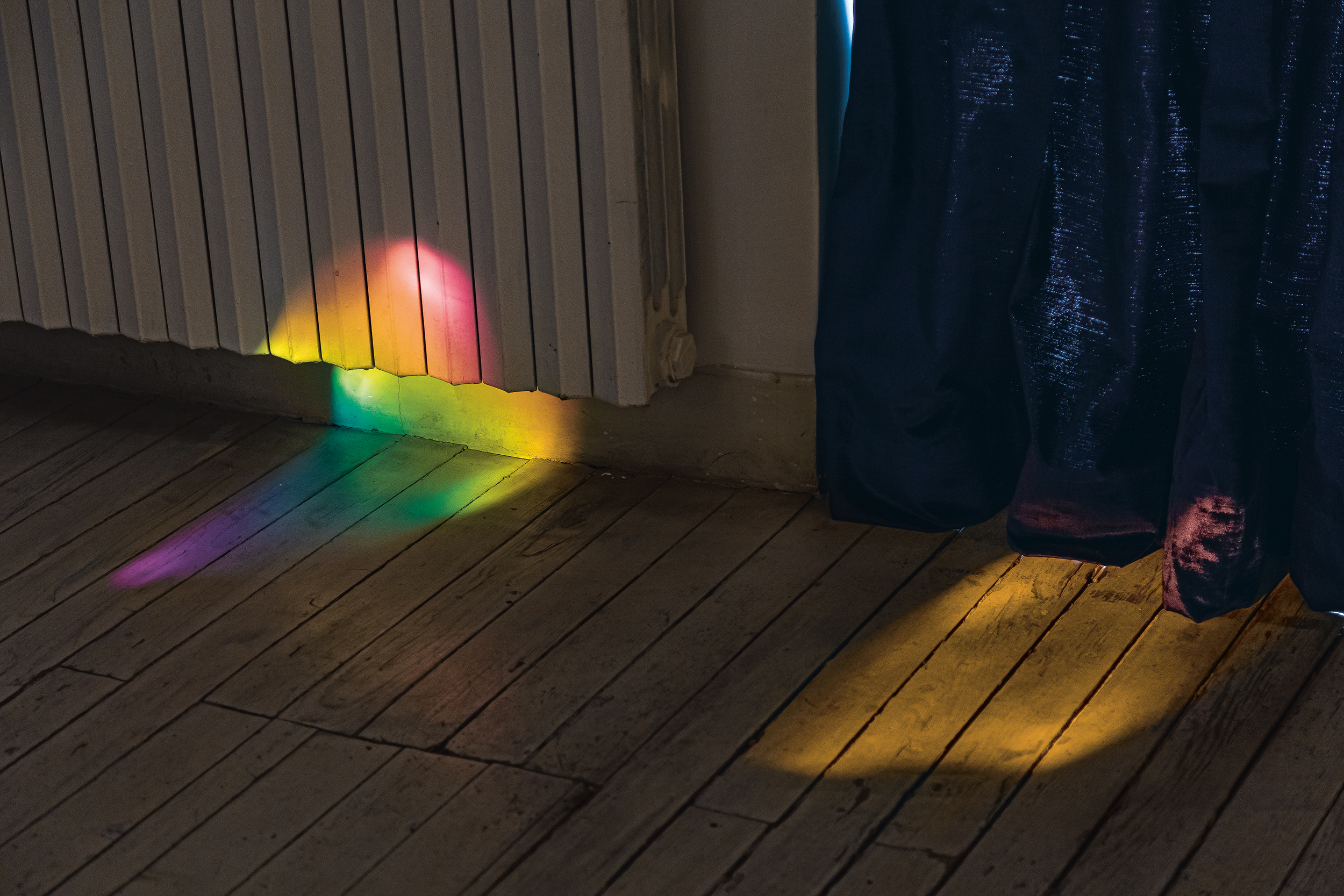
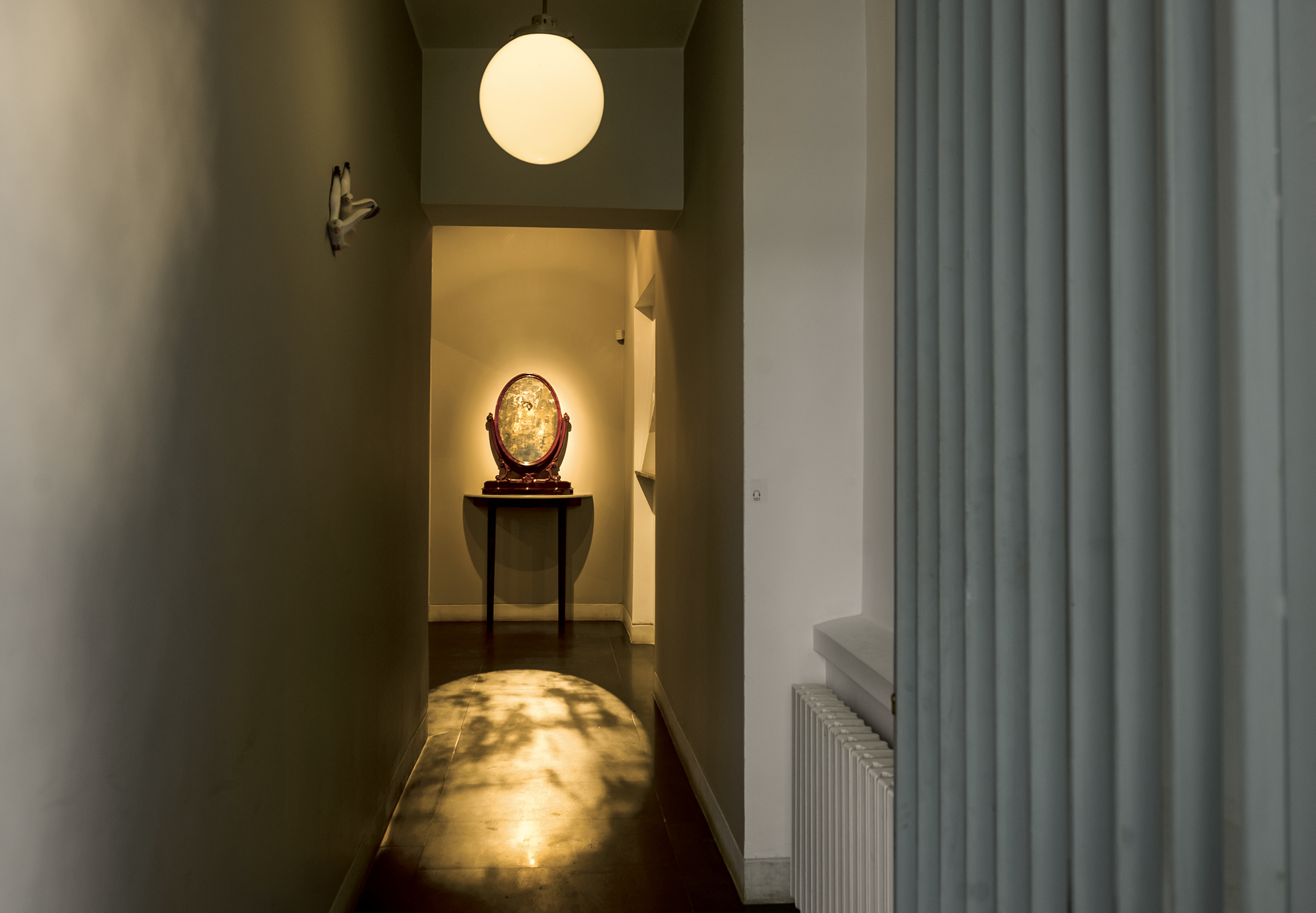
Mahmoud Khaled, Proposal for a House Museum of an Unknown Crying Man (2017)
Ismail Fayed is a writer and critic based in Cairo. He is interested in contemporary artistic practices and the possibility of queer joy.
Mahmoud Khaled is a visual artist based between Cairo and Berlin. Working across installation, photography, and text, his practice moves through questions of memory, intimacy, and visibility. Attentive to queer histories, it lingers on how images hold, obscure, or unsettle what can be seen or remembered. His work has been presented internationally in museums, institutions, and biennials.
