



Linocut by Mona Ayoub | 29.7 cm x 42 cm | 2024
At the Meadow
Somewhere across the hills, my great grandfather is returning with the herd, chanting with sounds no one understands but them: clicks of the tongue coupled with alternating high- and low-pitched composite syllables. My grandmother’s father inherited these sounds—their common language—from my great-great-grandfather who inherited them from my great-great-great grandfather before that. It is dawn and my grandmother is awake. She is sixteen years old and has been working the fields with her father ever since she could remember. She walks to meet them through the green meadow, lush with red poppies and white daisies, the wooden milking stool tucked under her armpit. The crisp morning air tingles the hairs on her arms as it does every morning. One by one, she greets the goats, then puts the short wooden stool beneath Leila, the only lactating goat.
Gently, she cleans Leila’s udder with a wet cloth and milks her.
In rhythm, the milk hits the bucket.
My grandmother’s hands caress, calm, and milk all at once. She massages Leila’s udder gently. Palm on udder and skin on skin. Their gazes lock, and for a moment a world is opened between these two species.
Gathering and Preparation
She returns to her parents’ house carrying several tin buckets of fresh milk. She enjoys taking the path back through the olive grove, although longer, as it offers her privacy to sing and pretend without anyone watching. A long piece of wood from which the bucket handles hang rests across her shoulders. She puts them to boil on the fire she has made from fallen olive tree branches and waits till the milk cools to warm. Then, she sifts through the cracked wheat her father brought back from their neighbor’s field in exchange for fresh milk, picking out the ones with insect bites.
She cultures the now room temperature milk with a ladle of leftover yogurt she made two weeks ago and leaves it overnight, wrapped in goatskin. In fermentation terminology, “to culture” is to introduce an already existing amount of bacteria or fungus into a concoction to ferment. In the case of yogurt, the bacteria slowly begins to eat at the sugars in the milk, multiplies and begins to emit acid instead – turning the milk, with time, into yogurt.
My grandmother cultures us in this same way, introducing ideas and practices to us, ladle by ladle, waiting for them to multiply, to transform us forever.
As the yogurt ferments, she continues her day, feeding the chickens and ducks, sweeping fallen leaves and tending to her flower and vegetable beds. By next sunrise, the yogurt, fermented with the help of microorganisms, is ready to soak into the handpicked and sifted wheat. The wheat grains provide a vessel to preserve and dry the yogurt. Each grain will absorb to its fullest.
She taught me that among its many benefits, yogurt can cure a yeast infection: fingers cold with cultured yogurt enter my cervix.
The yogurt and its microbes work their way through and become one with the body. The bacteria Lactobacillus secretes hydrogen peroxide killing the fungus Candida in a gruesome battle. My body becomes the yogurt, the microbes, the milk, the goat. The milk in the goat becomes the yeast in my body. A newly formed intimacy.
Sitting and Fermenting
The cracked wheat will now ferment for eleven days. On each of these eleven days, my grandmother will mix the yogurt-borghol with her hands to prevent rot and infuse a taste like an old clay pot does over the years.
Depending on what she is fermenting, my grandmother knows what toxic microbes look like: hairy, neon colors, slimy textures. She knows what different smells indicate: acetone odors signify the need for slower fermentation while pungent odors signify the need for cooler temperatures and increased feeding rate. She knows what each fermentation is supposed to smell like at every stage of its transformation: Milk starts off sweet, and slowly begins to sour and acidify as it turns into yogurt. Above all, she knows that although it may seem she is in control, bacteria and microorganisms are directing the entire process.
This precious knowledge has no exact instruction. It is the result of many trials, sensual explorations and playfulness with the other species she is working with, in this case bacteria. Sensual, as it demands the immersion of her senses to communicate with and understand them.
I watch my grandmother play games with the invisible living beings she ferments. They are all present, almost her size, often even bigger, as though through playfulness these invisible living beings begin to take up all the space and form they desire. I observe her greet them as she checks on her ferments in the morning, and feel her calm them down when she has forgotten to feed them on time. Across the years of observing her, I have found how to play too. Sometimes as if her hands are now my own. As if I had tasted a lifetime of fermented green kishk, as if the earth I dig and plant, I have dug for an eternity – with hands past and continuous.
Time and Decay
For a long period after her work is done, she sits on the two cemented front steps to her house, gazing at the world she inhabits and waits. After herding, cultivating, and chopping, she waits for the microbes to do their work. She waits for decomposition and recomposition of elements. She waits for bacteria to eat what it deems worthy and expel what is not.
Much like long awaited death. When our bodies lay open in the earth. A feast. A parade for decay. Our bodies become soil. One day, we too, will be vessels for decomposition –
an entire ecosystem in conversation,
living beings, visible and invisible
carrying messages across
the grazed grass,
to the microbes in the goat’s gut, to the milk, the udder,
to the tin gallons carried home,
left in the air where the milk cools,
to the leftover yogurt and sheepskin,
to the borghol, to my grandmother’s hands.
Each of our hands have their own flora, their own microbiome the same way air in different places does. Fermented kishk in one area will taste different than fermented kishk in another. The hands that mix fermented kishk, too, carry different tastes. Our own microbiomes and ecosystems found on the palms of our hands and in our bodies communicate and react with the ecosystems in our fermented food and inevitably the world around us. What do microbiomes tell us about “place” and “borders”? And what can we learn about “community” from these fusing organisms, visible and invisible, whose existence depends on their agreed upon interaction and contention with one another?
Transformation
Her senses have now morphed into those of the bacteria. Together, their senses become supernatural extensions of each other for the sake of a common goal. She has the ability to taste, see, touch, and physically alter while they have the ability to work and alter on microscopic levels. Together they have transformed food through a precise yet rambunctious endeavor.
After eleven days, it is kishk akhdar, fresh kishk. We eat it for lunch. The majority is spread onto sidir. The trays, carried by my grandmother and her five siblings, her father, the neighbors, make their way up to the roof to sit alongside the grape vines, the drying tomatoes, peppers, and figs until it too has dried and is ready to be finely pounded. Once dry, kishk can last several years without spoilage. Water alone is needed to rehydrate it into a meal packed with protein and nutritious fibers, serving well in times of scarcity.
For many months, food is consumed and shared with others living in and around the village. For many other months, it is stored – for recurring war.
Tell me the story again, I ask her. She begins.
“It is 1976, I am making a big pot, lagan لغن, of kishk, on this terrace for the family and a few neighbors. I am holding a long wooden spoon and stirring. My belly is big, I am pregnant with your uncle, and your grandfather was building an extra room there.”
She points to my favorite room in their house – the mashrabiyya, with the wall of hollow, decorative cement blocks that allow the sun to enter but shield the exterior view.
“I hear a low-hover above me; suddenly, I cannot hear a sound but I feel extreme heat rushing over my body. A missile has just hit a few centimeters away from my feet. I don’t see a thing, but I hear your grandfather call my name. I feel his hand lead me down the stairs. I hear the neighbors wailing at the sight of me. I tell them to watch that the kishk doesn’t burn. My body is full of shrapnel, but not one has touched my belly, Alhamdullilah. The doctors take out the shrapnel they could find. There were some they could not. Here in my scalp and here in my arm, here in my chest…”
When my grandmother asks me to bring her a sidir, I think of the word literally, her chest, and its expansive ability to encompass many living beings, her memory, her knowledge of what it takes to survive and, undoubtedly, her ability to play with others. On her terrace, embroidered with potted flowers and hanging clay pitchers of rainwater, are sidir of many sizes. But the one she most often asks me to bring her is the largest, two meters in diameter. The size she chooses every time does not surprise me—I imagine that she uses it most because of its great capacity to hold nourishment for others.
New Matter
From an obscure place, life is dormant, about to emerge, and sometimes when it has been confined long enough, explodes.
What are we left with after this long process? The act of fermenting is the literal preservation and transformation of organic materials into new matter with nutritional value stored in the very microbes that make them. Fermented foods, with their microorganisms and collective labor, enter our bodies, rearranging its molecular structure and inscribing embodied memories, both old and new, into our cells. We not only work with these microorganisms but ingest them too, a cyclical giving and taking of life. Through fermentation processes, whether generationally passed on or inherently part of our body build up, we preserve ways of engaging and creating symbiotically with the world we live in and those living in it.
Through fermentation, we inherit a generational instinct for communication and sensual exploration with other species. It teaches us to listen more closely, to widen our senses so that we may understand and work alongside these species. Through this exploration, the knowledge handed down to us invites us to imagine and create within worlds that sustain one another. Fermentation becomes not only a practice of preservation – of biodiversity, our imagination and our (thankfully) mortal selves – but also a way of sustaining the wild and the magical worlds that continue to flourish long after we are gone.
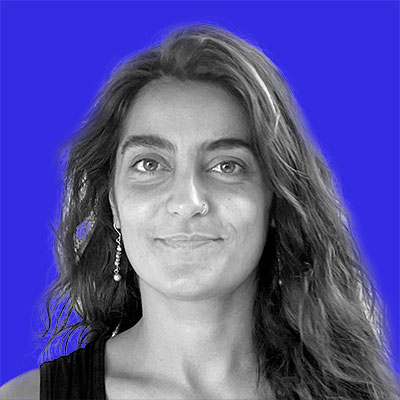
Mona Ayoub is an environmental researcher, human ecologist, and craft artist based in Lebanon. Her work explores land-based practices and artisanry as models for cooperation between different living organisms, and offers an intimate lens into orality, labour, and care. She is currently writing a mythical children’s book about silk breeding and weaving.
