



The author with her mother and father in Lebanon.
I’ve tried to forget December 19, 2020. In all those memories that keep coming back, I don’t remember my mother crying.
❂
It was late in the afternoon. My dad and I were sitting in opposite corners of a room, an old fan between us barely making a dent in the Harmattan heat. This was after days of sleepless nights and the last long hours of pleading with my mom, holding her frail arms down to stop her from pulling out the oxygen tubes in her nose. My eyes searched the walls marked by time and loss, then found my dad’s shoulders, his head bowed towards the floor. I looked back at the bed, trying to remember prayers he’d taught me to recite as a child.
I used to love praying beside him, mirroring his every move, like a dance—hands to ears, right hand gently over left, bow then kneel, toes, palms, nose into the ground, slowly rise, finger towards the sky. Then one day, I don’t really know why, I just stopped—stopped playing with dolls, stopped wearing pink, stopped praying. For a while after that, though, I’d sneak into my parents’ room as Dad prayed, watching his head turn from one shoulder to the next, his hands on his knees, his forehead landing softly on the rug, his head bowed in faith, the room submerged in a stream of words I never did understand.
As I tried to pull out words from that past, mouthing whatever surfaced on my tongue, praying all the good my mom had spent her life doing with so much conviction would be currency enough for some sort of biblical miracle, the rattling from her throat stopped. The hospice doctor’s attempts to revive her were in vain. I broke down in the middle of the room, repeating, “I tried, I really tried.” My dad hugged me and wept. That was the first time I cried in front of him in two decades, the first I’d ever seen him cry openly in front of me. As we drove back home the next morning, in and out of potholes that felt like escarpments between Coconut and Sunrise, my dad started shaking and through a flood of tears, he said, “December 19… I came to Nigeria December 19, 1975.”
When I look back at my childhood, I’ve seen my dad cry a handful of times, though each time he never knew I was there. But my mother, I just can’t remember. Perhaps I’ve seen her tear up once or twice. But her grief was something she always seemed to keep private from me. My mother had her own language of survival, one of bluntness and playfulness, punctuated by silences—still water silences, torrential silences, and everything in between. And in those silences is where I often found myself, trying to fill them with a story of our existence that made sense to me.
What I knew of my mother, I got in vignettes—never the full picture. I never felt I was welcomed to ask too much. As I grew older, it was only through the eyes and words of my father that I began to grasp her, to grasp how she saw life, how she navigated grief, her past and her vulnerabilities—and mine.
❂

The author’s mother and father.
Three years, two months, and fifteen days after Mom died from cancer, I called my dad to talk. I’d been calling more as I was going through a painful period in my life. I told him how I’d been crying for months, how every inch of my being felt broken. I felt like I was drowning, struggling through the doldrums of sadness, afraid that this time I wouldn’t resurface. I wasn’t sure who I was anymore—I’d lost my bearings and my life savings in Lebanon’s financial collapse, lost any sense of safety and hint of purpose I once had. I was witnessing a genocide unfold in unspeakable ways, grieving through a screen for those I’d never met, grieving massacres interrupted by fit checks, trick-the-algos, and #AIArt. I was grieving our past and futures—and grieving the end of my relationship.
When he replied that I’ve always been strong, to just give it time, I broke down. I didn’t want to be strong anymore—for once, I just wanted to be. In trying to console me, he said he knew how it was to feel like you’re unable to stay afloat. He then said he’d spent two years crying alone every day after my mom passed away, closing the door of their bedroom each time so my brothers wouldn’t worry. When I heard this, my tears stopped. I didn’t know what to say. This was my father, the man who stayed up all night to fan us with TIME magazines when NEPA would subject us to weeks-long power cuts, to then go to work the next day, empty of rest but full of hope that good fortune would walk into his shop and change our lives forever. I felt cruel for not reaching out to talk about how he felt; I just avoided it all, hoping time would do a better job than my words.
I thought about how it must have been to sit in that room he once shared with his partner of forty-one years, her armchair by the window now empty next to his; the bottles of groundnuts and cashews between them gone; that old, boxy TV set no longer tuned into Africa Magic. And my stomach hurt thinking how soon after Mom had died, I flew back to Beirut, afraid to lose my job in the midst of a deep economic crisis, but more afraid to face the fact that I’d lost whatever chance I had to really know my mother—and myself.
❂
When I was born, I was almost named Istilah, “to reconcile.” My parents never checked my sex before birth; they preferred the surprise and wanted to name me on the spot. So, when I came into this world, my father—being the first son—thought to name me after his mother, my teta Salouha. But as fate would have it, I was named after a flower instead. A Kurdish friend once shared an online search for “Nisreen” in his language, revealing a purple flower. Others told me, no, it’s a jonquil. Google it in Arabic and the prettiest of dog roses appears. Fairuz sang: “I never forget you Palestine / The distance is hard and cruel / In your shade, I am, nisrin.” In this context, Palestine is a wild rose. Whatever flower it is, a flower was chosen as my name, and not by my parents.
According to my dad, the story goes like this: He knew a Lebanese man in Apapa whose mother-in-law was known to everyone as al-Hajja. Back in Beirut, al-Hajja lived next to my grandparents and visited them often. When she was in Lagos to see her daughter, she heard my mom had given birth and insisted on visiting. As some of the roads in Trinity were in bad shape, al-Hajja and her daughter eventually parked by the roadside and walked the rest of the way. When they finally arrived and saw me, and al-Hajja learned my dad was still on the fence about Istilah, she said, “Why not call her Nisreen?” And that’s how I was named, by a woman I’ve never met.
What many don’t know is that I have a second name, my “native name,” one that does not appear on my birth certificate, given to me by my mother. When I was born, she named me Ejaita, which means “let them say” in her language, Urhobo. I never asked her why she chose it. Perhaps a Bendel woman marrying a Lebanese man gave people a lot to talk about. Or maybe she just didn’t care what people said.
My mother also had an Urhobo name. On her passport, she’s Joyce, but her native name is Jite: “This is sufficient.” My mother moved around the world carrying her name in all its meaning; she was enough, she believed in herself, she did everything and anything without needing validation from anyone.
She had dark, slanted eyes, thick eyelashes, and a warm speaking voice that surprisingly couldn’t carry many notes, yet she happily sang to herself all the time. She was also my fashion icon—photos of her beaded braids and body-hugging dresses, yellow bikinis and short afro, silk tops and flared pants, shaved head and that green and white dress were the subjects of my childhood envy.
Mom ran a catering business from our house, waking up every day around 3:30 a.m. to begin back-breaking work, pounding yam with a large wooden pestle and mortar, coolly killing catfish for her much-praised pepper soup. She taught herself to make meat pies, scotch eggs, sausage rolls, puff puff, and buns to supply street hawkers back when Google was non-existent and cookbooks were a luxury. She spent mornings filling transparent plastic bags with water, making ice to sell to market women at Kingsway. When I was in primary school, she turned the parlor in our second home on Calcutta Crescent (our first home being the one in Trinity) into an informal restaurant, serving meals to the customs office workers next door. When my dad tried to protest, I remember her saying, “Amed, you too dey shame, shame go kill you.”
She did whatever it took to give us a comfortable life even as I was asked every evening to rub her beautiful slender fingers and painfully swollen wrists with Bengay or Deep Heat, followed by tightly wrapping her hand with a brown fabric bandage.

Joyce Omoh.
My mother was a force—one day still, the next a storm. My dad once told me that early on in their relationship she had slaughtered a chicken in their first home in Trinity (a house she’d expertly painted with no experience, my father coming back from work to find the place glistening). A neighbor, an Igbo woman from north Delta who had been eyeing my dad for a while, had brought a chicken over that day. She claimed that in her culture, women were not allowed to kill chickens and asked if my father would help her slaughter the unfortunate bird for her to cook. Instead, Mom stepped forward and obliged, replying, “In my culture, it is not a taboo.”
My father swears Mom often had premonitions: as he put it, “Her dreams never lie.” One day, before he was set to begin construction work at a new site, she warned him not to go. She’d dreamt the police would fire bullets; she vividly saw him jump a fence. Dad brushed it off, saying, “What did you have for dinner?” But just as she’d dreamt, police appeared out of nowhere when he got there and started shooting at him and his team, sending the workers scrambling over the fence. Laughing, Dad told us that he refused to follow them, so Mom’s dream wouldn’t come completely true. She had a few such predictions over the years.
My mom was an enigma; I spent most of my life trying to get beneath the surface of who she really was. She never said much to me about her dreams, her wishes, her fears. But as far back as I can remember, she’d write different sayings she thought of on her bathroom mirror with red lipstick. Every other day or week, there it was—a new line, advice, prayer, a word, a thought.
The day after she died, we sat together silently—me, my brothers, and my dad—each of us wading through an ocean of emotions. We were in the garden of my parents’ current home, in the Ibafon area of Apapa. I looked to the right, toward the coconut tree Mom had planted years ago as a sapling, now rising stubbornly towards the sky no matter how many times the weight of Lagos’ storms forced it to bow. Beneath it was the only plant my father planted in that garden—a grapevine that never bore grapes, declaring, year after year, that it was made for a different place.
As we sat in Mom’s garden without her, I thought about how, after many lifetimes together, my parents ended up meters away from where they first lived, in Trinity. I thought of how they had so many dreams of bettering our lives and tried so many ways to make that come true—beekeeping, cashew exportation, poultry farming, a gift shop, a canteen, a vegetable store, a furniture showroom. So many journeys, only to end up a few streets away from where they began their life together.
Finally, my father broke the silence to tell us that when he and Mom had started dating, the first quote he’d ever seen her write was on the door of the place she used to live: “sea never dry,” in that trademark red lipstick. As he said those words, I realized that sentence was my mother. She didn’t need anyone else. To her, life was a sea—powerful, vast, teeming with possibilities, if you just know how to navigate it, and oh so deep, much could be buried in its depths to be forgotten forever.
But the thing with the sea is that, when you’re at your weakest, it can drown you. The fight against the currents of life is such a battle that you sometimes forget where you were swimming to in the first place. The tide suddenly turns, and all you tried to bury resurfaces, dragging you down into its undertow, no matter how hard you fight against its pull.
❂

Joyce (second from left), her siblings, and a family member.
Some of what I knew about Joyce Omoh was from when she’d let her guard down for just a moment, offering a passing glimpse into her childhood, leaving me to fill in the missing pieces. I remember once, as I was going through that woven basket of loose photos in my parents’ room, I pulled out an old sepia-ish photo from the pile. It was of maybe six or seven children of different heights and ages, all wearing outfits sewn of the same material, standing behind a young woman sitting on a chair. I pointed to a little girl; I knew she was Mom as she had knock knees like hers—and mine. “Is that you?” I asked. She nodded. “That was after my mother left. I never smiled again.” And that was that; she said nothing more, then left the room.
There were many of these moments, like when I was maybe nine and decided I’d teach her to read and write better as a way for us to bond. I remember she tensed up, said she was busy, and left for the parlor. Years later, I discovered from my dad that she was taken out of school in primary four by her father and made to keep the home instead. I remember looking at photos of my mom at the beach before I was born, wondering why she had eventually stopped swimming, thinking perhaps it was because of that near-drowning experience she and my father had at Bar Beach. I later learned from my dad that her mother had drowned in a creek when the canoe she was in capsized, her body never found, a funeral never held.
It wasn’t until later, as I went through my own experiences of womanhood, that I understood how those glimpses spoke of silent struggles that shaped my mother’s way of being, and, in turn, shaped mine. I see it now, in the memories that stayed with me, like when she used to apply the scalp-burning relaxer to my hair to straighten it (I still have bad growth in the spot that would scab) and how, when I later moved to Lebanon for university and grew out my natural hair, she didn’t like what she saw as unkempt. Or when, on one of our way-too-short Eleko Beach Sundays, she asked me to come out of the sun as she didn’t want me to get too dark. Some years later, while dropping me off at a Bulgarian friend’s house, she turned to me in the car and said if I was facing any discrimination because of my complexion to let her know. I now realize why.
Looking back, I wonder what she must have gone through—how her past shaped the way she navigated care, fear, loss, love. And when I sat in the backseat of our old Datsun with my brother, as my dad drove slowly beside my mom, begging her to get back into the car as she marched on with her bag, ground-shaking anger in her shoulders, soul-shaking sadness in her eyes, I wonder what she was really trying to leave behind.

The author with her parents and brother, Omar.
My parents met in line at a bank. I never wanted to believe the story at first because it felt unromantic. Then, as I grew out of my preadolescent notions of love, spending days out of school for missed fee payments and nights on the edge of the center table watching NTA Channel 5 on mute while everyone slept—both feet up, slipper in one hand to deter the rats, Raid in the other for the cockroaches—I’d laugh to myself thinking how that chance encounter at a bank now seemed a bit ironic.
When I moved to Lebanon in 2001, I remember proudly being told by Teta that she was the catalyst of my parents’ marriage. My grandmother’s first time on a plane was to visit my dad in Lagos, and there she told him it was a sin to live with a woman if they weren’t going to wed. And so, they did. Throughout their marriage, my parents never gave each other gifts on Valentine’s, never shared sentimental stories of their courtship, never celebrated anniversaries or birthdays. In fact, I never knew my mom’s birthdate. Sure, she had one on her passport, but whenever I’d ask her, she’d never remember the year; the dates would change each time, and sometimes she’d say, “I’m one year younger than your father” and that was that.
The day she passed away, I remember seeing her age listed as sixty on the death certificate. That number on paper made me feel that life had been so cruel. It felt like she had been made older before her time. You could see it when, in her thirties, she traded her short dresses for loose boubous, and when she’d go to bed earlier each year, exhausted from working all day. You could see it in her wrists, her knees, her feet, gnarled so much that she could barely walk by the time she was in her mid-fifties.
I asked my dad about my mom’s birth date recently and he said, “To tell you the truth, I really don’t know it. According to her sister, she was probably born around 1961, so that would make her three years younger than me.” Then after a pause, he said, “We married young, you know; I was twenty-one. We grew up together.”
❂

The author and her mother.
For a long time, friends in Lebanon thought I had the closest relationship with my mother. I’d post pictures of her (sometimes baby me would feature in them), with captions that essentially said how remarkable I thought she was. But the truth is, we were far from close. I barely called, and when I did, we didn’t have much to say. I loved her deeply, but I didn’t know how to say it to her; I never learned how to. So, I guess I just found a way to say it to everyone else.
Then, in my thirties, my relationship with my mother changed. I remember the day it turned. I’d walked away as she was lecturing me—probably about marriage, the constant theme of our arguments since I entered my twenties. Every two or three years, I’d return to Lagos for a ten-day-or-so visit (whatever work and finances would allow) and somehow, we’d always take a turn onto the road of “Why are you not married yet?” I graduated with distinction, earning full scholarships for both my bachelor’s and master’s, and was a published writer. Her silence on all I’d worked hard for hurt, and her constant focus on marriage felt like an immensely unfair pressure.
So, I walked away, something I’d never done, as my Nigerian upbringing required showing the utmost respect to your elders. My father walked into my room minutes later, sat next to me, and in a calm tone said, “Forgive your mother; she’s had a hard life and doesn’t know how to deal with it.” It was that day he began to tell me about my mother, starting with how she’d left home. He told me that her father—whose photo hung in our parlor—had remarried several times, and each time my mom had been subjected to the harsh realities of a new stepmother. At some point in her life, when her mother left to make way for another wife, my grandfather took Mom out of school. She essentially had to care for his new wife and children, until one day, as my dad put it, “her father knack her for head with wood.” She decided to leave for her mother’s, but when her mother told her she had no means to take care of her, my mom left for Warri, and then took the bus to Lagos.
❂
After my mother was born, whatever year it was, her state at the time was known as Bendel. Her mother was from Ovwian, her father from Aladja, both sister villages on the periphery of Warri, a city known today as a major petroleum hub. In 1991, Bendel state became two, its north Edo and its south Delta. Both belong to the greater Niger Delta region where Nigeria’s major rivers—Niger and Benue—merge in Lokoja and flow into the Atlantic.
This larger region, with its indescribable nature, movie-perfect mangroves, and labyrinth of waterways is where my mother grew up. It’s also where the Portuguese in the late 1400s, and later the British in the 1700s, traded in human life, as well as the site of one of the world’s worst environmental catastrophes caused by the extraction activities of European and American oil companies (and the resulting grassroots resistance/armed militancy, depending on who you are). It’s where Ken Saro-Wiwa and the Ogoni Nine were hanged for protesting those same companies, and where my mom was moved deep into the bush during the war between Nigeria and the secessionist Republic of Biafra, said to have killed up to two million people. Not once did she tell me about her experiences during that time. How I even came to know about that period of her childhood was by chance.
Two weeks before she died, my mom still insisted on going about her day as if nothing was happening, even though she had one working arm by this time, her humerus so thin from the metastasis that it had broken. She also could barely walk a couple of steps before we’d have to carry her, as her pelvic was thinning at such an alarming rate, it was close to fracturing.
That day, my cousin Lucy and I set up a chair in the garden, a fire was lit (as my mother liked to cook outside, over charcoal), and with the help of her friend, Auntie Linda, and the housekeeper, Blessing, Mom set about making ogbolo—a stew made of powdered wild mango seed, flavored with crayfish and bitter leaf, and served with dried fish and meat. But when they broke the dried fish to clean it, it was phosphorus pink inside. As they threw away the entire batch, I asked why it would be such a color. My mom said it could be poison. She then told me how during the civil war, her uncle had gone fishing and put explosives into the water, drawing hundreds of dead fish to the surface. She said how much she used to love him until that day.
Every Lebanese knows war. From Camille Chamoun’s 1958 war to the fifteen-year civil war that left some 150,000 people dead and led to almost a million fleeing the country, war is talked about in Lebanon. It’s in jokes about growing up in underground bunkers; it’s in the walls of buildings; it sits in the parliament, occupying every chair (though it’s nowhere to be found in our history books and never taught at school). As a child growing up in Lagos, I learned a lot about the Lebanese Civil War from my father. He told me how it started in April 1975 and how he left some eight months in, alone, shortly after he turned 17. Amongst many reasons for leaving, the main one being his relationship with his father, he told me of two others that forever etched themselves in my mind.
The first was the bakery. “When I arrived, there was a long queue. They gave us numbers; mine was 63—I still remember my number till today. So, I said, before my turn will reach, it will take time, let me go for a walk. As I walked away, I suddenly heard a whistling sound, and then I was thrown to the ground by the force of an explosion. When I pulled myself up, there was human flesh all over me. Many people died, most people in that queue died.”
The second reason was the checkpoint. “I turned back to see it, just on the road to where Auntie Mona’s house is now. There were men in black trousers and black shirts, wearing very big, something like 10 inch-wooden crosses, on black ropes. I saw them checking IDs. They had a lorry next to them. From time to time, you’d see them tell a boy to join the lorry. It was later I heard they took them to the national stadium, and they were executed there.”
I grew up in Nigeria with the traumas of Lebanon’s civil war hanging over my childhood, ghosts of dead friends and informant friends, stories of life in dark bunkers and life that could be taken in an instant, reminding me that a part of my identity was carved from war. But my mom, she said nothing about her childhood lived during wartime. I have nothing to understand how that might have shaped her. Nothing but the image of floating dead fish and a little girl who no longer smiled at her favorite uncle.
❂

Joyce at Queen’s Drive, Ikoyi.
I remember my mom’s face as she looked up from the pot of ogbolo that day to speak to my cousin Lucy, telling her she looked tired and needed to lie down. Lucy protested saying she wasn’t and that she wanted to stay and help with the cooking. But my mom wouldn’t have it; in her stubborn way, she insisted Lucy go inside and nap for a bit. She wouldn’t let it go. She insisted so much that at some point, I thought of stepping in, but before I could think of a polite way to do so, Lucy gave in and walked into the house, into my bedroom. I followed her to apologize, but as soon as she put her head down, she drifted into a deep sleep. I stood there and thought, of course, Mom could see right through her. She always saw through anyone. She’d spent the weeks before her diagnosis begging me to come back to Lagos, but no amount of my cheeriness through the phone could cover up what she could clearly sense in my voice—that I was exhausted from years of feeling like an outlier in my own country.
Days after Mom passed away, Lucy called to check on me and then told me she was pregnant; she’d just found out. As the happy words rolled down the line, all I could think of was how Mom had left this world just as Lucy’s child was getting ready to enter it. Then my cousin told me something that jolted me out of my sadness: it was my mother who had told her she was pregnant. After finishing up the cooking in the garden that day, she’d spoken to Lucy shortly after she’d woken up. Mom had told her that she should go see a doctor because she was pregnant. When Lucy, whose figure is as lean and toned as my mom’s was at her age, asked how she knew, she said from a vein at the base of Lucy’s collarbone. After Mom died and her body was sent to Warri for burial preparations, Lucy went to the doctor to check, and it was true—she was with child. I was shocked. But then I remembered that my father always said, “Your mom could see things.”
❂
Here’s a story about my mom that I didn’t hear from my dad. In one of my last attempts to connect with her, as she had to spend long hours in bed in the last days of her life, I tried to start a random conversation. Racking my brain for what to say, I asked her what work she did after leaving her father’s home. After a pause, she said one of the first jobs she did was cleaning houses, but she left soon after when her employer’s husband pretended to go to work one day and came back after his wife was gone and attacked my mother. “He tried to do something” was the way she’d described it. Shocked, I tried to press for more, but she closed up, saying she didn’t want to talk about it.
I’d spent years in Lebanon working on projects and initiatives related to migrant domestic workers, as well as mixed identities, until one day I decided I was done. I quit volunteering, stopped my work as an advisory board member, stopped it all. My emotions were marred from constantly being exposed to all forms of abuse, as a subject and as a witness. I just felt I could no longer be useful. All that time, my mother was aware of my work. I’d told her about it. She even called to say she saw my work on CNN. Yet, not once did she reveal to me her experiences working in someone’s home.
❂
Throughout her final days, mom kept apologizing to us for having to carry her around. She’d say sorry every time we had to take her to the bathroom, feed her, bathe her. I wanted to scream at her to stop. Why did she feel the need to apologize? The night before she died, I spent it lifting her up to the edge of the bed each time she needed to vomit, while she weakly protested, insisting my father do it, that I’d hurt my back. In the early morning, before the sun rose, as I knelt behind her on the rock-hard bed in the flat we rented to be close to Lagos University Teaching Hospital, lifting her once again, she suddenly said, “You really do love me.” My heart stopped. Had I never told her I loved her? Had I never shown it? Did she think all this time I didn’t love her?
All my life, I found my mom’s cold way of being and lack of vulnerability endearing at best, frustrating most of the time. When I’d get sick, she would insist I walk, work, do anything but sleep, in order to sweat out the disease. She was right, of course; her suggestions had me feeling better in no time. Yet I’d always wish she’d be softer with me, coddle and fuss over me, let me sleep, kiss my forehead. When she blurted out those words, I realized that in not wanting to be like my mother, in wanting to be an expressive woman who says what bothers me, who says how I want to be loved, I had somehow become her, to her. I’d never dug too deep, never opened wounds, never fussed over her, never did what I promised myself I’d do. I silently cared, silently loved, silently hurt for her, but never told her I did.
A year or two before we found out mom had terminal cancer, she sent me a voice note out of the blue. We’d been speaking more after my father had started to tell me stories about her although it was still limited. I played the audio, and to my surprise, it was a short message of her apologizing to me for the times she may have treated me badly. I remember sending back a short, written reply, something like “thank you mom for this, I hope our relationship will become even better with time.” Looking back, I regret not calling, not breaking the wall we had between us, not recognizing the ravine she’d had to cross to send me that message. A few weeks after she passed away, my father mentioned that she’d visited him in his dreams a few times. I never asked the details of her visits. I only thought of how not once did she visit me in mine.
❂
Beirut’s August 4 port explosion tore through our city, shattering homes and hearts, ripping futures apart, taking many before their time, leaving in its wake a film of defeat, anger, sadness over every person and every place. There were those who lost their refuge, who lost loved ones; others who lost life partners; many who lost a sense of self, safety, purpose. What I lost that day was a pendant with a prayer. A handmade silver cylindrical piece I’d picked up from the Iranian Expo by Phoenicia Hotel. It was inscribed with a prayer in Farsi, written by hand in an almost rudimentary script. When I came home after buying it, I tore a piece of paper from a notepad and wrote down a simple prayer to keep my family safe and happy always. I wore this pendant everywhere, underneath my shirt, away from the eyes of my Sunni Beiruti family, buoyed by the quiet strength it carried for me.
After the explosion, I searched all around my flat for it. Amongst the shards of glass and strewn belongings, I found all the money I’d tucked away, a few notes I’d managed to take out at a loss from the bank that week to send home to my parents; my mom was sick at the time, and we didn’t yet know it was cancer. I found intact dishware, old t-shirts, spare keys to my last two apartments. And I found the pocket Qur’an with the faded cover and a broken zip, gifted to me years ago by a service taxi driver for giving him money he urgently needed that day to complete payment for his little daughter’s eye surgery. Before I got off at my destination, I’d pointed to a bank ahead and told him I needed to make a quick stop. In my mind, I thought, well I made extra this month and even if he’s lying, he deserves the money for being such a good actor. When I turned from the ATM to the car to hand him the money, his face had gone from tired and angry to broken-down relief. When I saw tears pouring down his face, I started crying, a wave of shame washing over for me doing so in front of a stranger. He accepted the money and suddenly started looking around his car, telling me not to leave. Then, from the side of his door, he pulled out a small Qur’an and handed it to me, his hands shaking. Through waves of thanks, he insisted I take it. Despite not being religious, I kept this Qur’an safe—wherever I went, whatever new home I moved into, hoping it would bring me good luck.
Amongst the dust and debris that was once my apartment, I found it along with everything else I’d saved over the years. But no matter how much I searched for it, no matter how many times I combed corner to corner, no matter how many neighbors, volunteers, and workmen I asked, I could not find that pendant with the prayer. I was drowning under so much pressure—my mother’s illness, fighting to get what little money I could from the bank due to capital control restrictions at the time, the weight of responsibility I wasn’t sure I could carry—and in that moment, that pendant with the prayer felt like it could get me through all this. It had become something more, a symbol of control, or hope—an anchor.
Four months and 15 days later, my mom took her last breath.
❂

Joyce by the inner waterway at Badagry.
When we still lived in our second home on Calcutta Crescent, Mom would take me and my brothers to Apapa Club when she had a few free hours on Saturday. She never taught us to swim, never got into that blue mosaic pool. Instead, she’d sit under a parasol in the heat, fully dressed, watching us. When I turned thirty-one, I finally taught myself how to swim by mimicking anyone in the pool I could. It took a few more years to figure out I’d been swimming all wrong, and I finally improved enough to venture into the sea, but never too far. I still have this crippling fear—perhaps my mother’s past left its mark on me. What I’m certain she did leave me, though, is this: In life, you can sink or swim, and my mother chose to swim, despite her past, despite the torrents and currents, despite it all. And through her life, through the way she flowed in this world, I now see that this sea I’m swimming in—this story of who she was, and who I am—isn’t the same one I swam in my whole life. And it won’t be the same tomorrow.
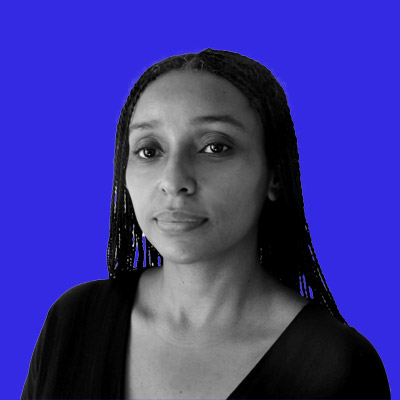
Nisreen Kaj is a Nigerian-Lebanese creative and communications professional, currently based between Beirut and Lagos. Primarily a copywriter and editor, she conceptualizes and develops projects that explore identity, racism, and belonging through storytelling, photography, personal archives, sound, and video.
