





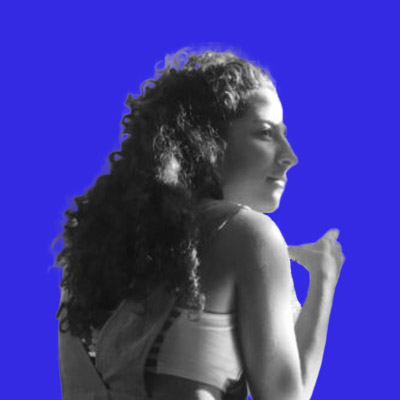


Photograph by Nour Annan
It was an ideal weekend in early September in New York City when I found myself, having recently returned from Beirut, eager to tag along to Robert Moses beach on Long Island with a friend and a group of people I had never met. The Long Island shore was dotted with dispersed pockets of sunbathers, lying ten feet apart. It was a languid day, moving at its own pace. I barely plopped my bag onto the sand before ripping off my clothes and rushing towards the ocean, diving headfirst into an incoming wave. Almost immediately, the wave ripped my sunglasses off my face, pulling them quickly and fiercely under its opaque surface. I panicked, frantically searched the murky waters, finding nothing. Agitated, I paced the beach, hoping they would be swept to the shore by some divine intervention.
Grief and guilt simmered in me. Even long after I had given up my search for them, I remained irritated. “I can’t believe I lost my sunglasses,” I kept repeating. I felt bitter and foolish. How absolutely vain I must have seemed to this new group of people. “Maybe they’ll turn up now,” I’d remark every time we went back in for a dip, scanning to see if there was a flash of gold or a reflection of light anywhere.
My aunt had given me these sunglasses—a vintage, stylish round pair that had belonged to her late cousin—at the beginning of my visit to Lebanon this summer. Known in the family for having a knack for losing things, I had vowed not to misplace them. I wore them throughout the summer in Beirut.
I wore them to the pool on the first days of my visit, as I adjusted to the feeling of foreboding that hung in the city’s garbage-ridden streets. I wore them in the South of Lebanon, gazing at the sea from a rooftop in Tyre, after I had picked mangoes from the trees and dug into their sweet, sticky middle. I wore them in the North of Lebanon, in Batroun, days before my departure, where the sea was crystal clear, and the sharp, rocky shore was somehow still welcoming. Later, I wore them as we swept shards of glass off our streets in the humid heat and cleared out pieces of doors and windows and ceilings in the days following the government-sponsored massacre on August 4. I wore them in the bright sun and heat of the afternoon in Martyrs’ Square on August 8 when we chanted “Prepare the nooses!” as security forces welcomed us with canisters of tear gas, rubber bullets, and live ammunition, injuring close to 700 protestors that day, mere days after the explosion.
I went about my day, resigning to playful interactions with the waves and a few beach volleyball matches with a sweet, competitive family, but the tightness of grief remained in my chest. My inability to let this loss go began to amuse me. In a matter of weeks, I had lost my city, my people, my plans, physical proximity to my loved ones, any sense of security, and my sense of time. Yet, it was the loss of my sunglasses that my mind clung to, desperate to correct. I was bargaining with the universe within the boundaries of what I thought I could control.
Earlier this summer, in the middle of July, before traveling to Lebanon, before the explosion, when I had first visited the beach at Robert Moses, I made sure to have a solemn conversation with the waves, offering my need for certainty. I was prepared for an unexpected summer. Even prior to the pandemic, Lebanon had been slowly but surely disintegrating in the months that had preceded my visit, with its decimated economy, persistent fuel shortages, rapidly increasing poverty and unemployment, and an utterly incompetent regime so entrenched in its failing post-war power structures that it had not even the decency to develop the pretense of reform. As I swam in the Atlantic, I felt generations of trauma stirring in my body, as if readying me for a moment when I would no longer have the luxury of worrying, only of enduring.
That moment arrived when my city was engulfed by an earth-shattering mushroom cloud and crumbled into bones.
My body and mind were stunned by the explosion itself, my grandmother’s apartment suddenly shaking violently before a deafening sound pulled me and my family down to the ground. I rushed into the bathroom to find my grandmother disoriented on the toilet, covered in the ash of her own cigarette. “I don’t get scared, don’t worry,” she said, “Are you scared? This is your first explosion, isn’t it?” (It was not).
To this day, I still cannot comprehend or cognitively process the explosion’s devastation. A deeper, existential shock was missing. And it is the absence of that particular shock that perplexes me.
Ronnie Janoff-Bulman, a professor of psychology, argues that the hallmark of traumatic response lies in its ability to shatter and force us to challenge core assumptions we hold about the world and our relationship to it. It is our assumption as children navigating the world, she states, that the world is an overall benevolent, meaningful space, in which our self holds worth, and our actions are met with equitable consequences. Following a traumatic event, our mind struggles to make sense of our newfound realization that these assumptions we held were, in fact, never true—this inner conflict characterizes our response to trauma.
I think about this theory often. I wonder whether it applies in a context like this, when our exposure to traumatic events is so deep-seated, chronic, and intergenerational in nature. Trauma no longer constitutes an event or collection of events, but rather embeds itself in the cells of our everyday existence and relationships with the world around us.
When the powers that be blew up their own capital, the home that they had pushed me out of, I did not bother to ask, “How could this happen?” No assumption of benevolence or justice was shattered, because I had not believed anything that happened contradicted the assumptions I already clung to about the world. In fact, I found myself questioning my own shock, wondering what else had I expected?
When trauma has been passed down through generations and remains pervasive in the threads of everyday life, how are assumptions of benevolence and justice even made? And if they are, when do they begin to disintegrate?
Following a traumatic event, most mental health treatment and recovery eventually includes working with the individual to build a narrative around what has happened, in which the person can develop some sense of coherence or meaning. Jannof-Bulman talks about the reshaping and rebuilding of more nuanced, accurate assumptions. Australian neurologist Viktor Frankl, during his time in a Nazi concentration camp, espoused the importance of meaning making, deeming it the one thing that a person can control in the face of overwhelmingly uncontrollable circumstances. It is a concept you can catch me integrating into any conversation, and it has framed much of my research as a doctoral psychology student.
Yet, I find myself beginning to question the relevance of this. At what point might the attempt to create meaning feel futile, impossible, and at times, destructive? For us to create any kind of helpful or accurate meaning surrounding the explosion, the decades of humiliation and injustice that preceded it, the inhumanity of August 4 and 8 would require us to try and make sense of the nature of our political system—this entrenched, humiliating institution that has held an exuberant amount of our power over our heads for decades. And where do we begin with that, when we are just a plaything in the hands of local, regional, and global powers? If, at one time, we could have hoped to find meaning in resistance, in revolution, we now are looking around in a hazy panic only to realize that our locus of control has never been more invisible to us.
“The ocean stole my glasses,” I text my aunt in despair.
“Maybe Randa wanted them back,” she responds, referring to the late cousin they had belonged to.
I have read enough about trauma to understand what my body is storing, and the myriad ways the trauma embedded into my cellular composition will choose to manifest itself. I know my control is at an all-time low. I recognize the grief tapping at my window, asking to roam. Knowing it is incapable of fathoming the loss of my homeland, it feeds loss to me in painful but digestible increments. Resistance is a practice to be sustained, and our collective loss creeps into every dynamic, every interaction—including the ones I have with the ocean. I hold on to my anger at the Atlantic, and at myself for choosing to return to it. For now, it is the only resistance my body can muster.
Nawal Muradwij is an Assistant Professor at the Department of Psychology at the American University of Beirut. Her work focuses on understanding and improving collective mental health for communities in Lebanon through community participatory research.
- Nawal Muradwijhttps://rustedradishes.com/author/nawal-muradwij/

